The World's Most Generous Refugee Policy Is Breaking Down:
Inside Uganda's Humanitarian Crisis
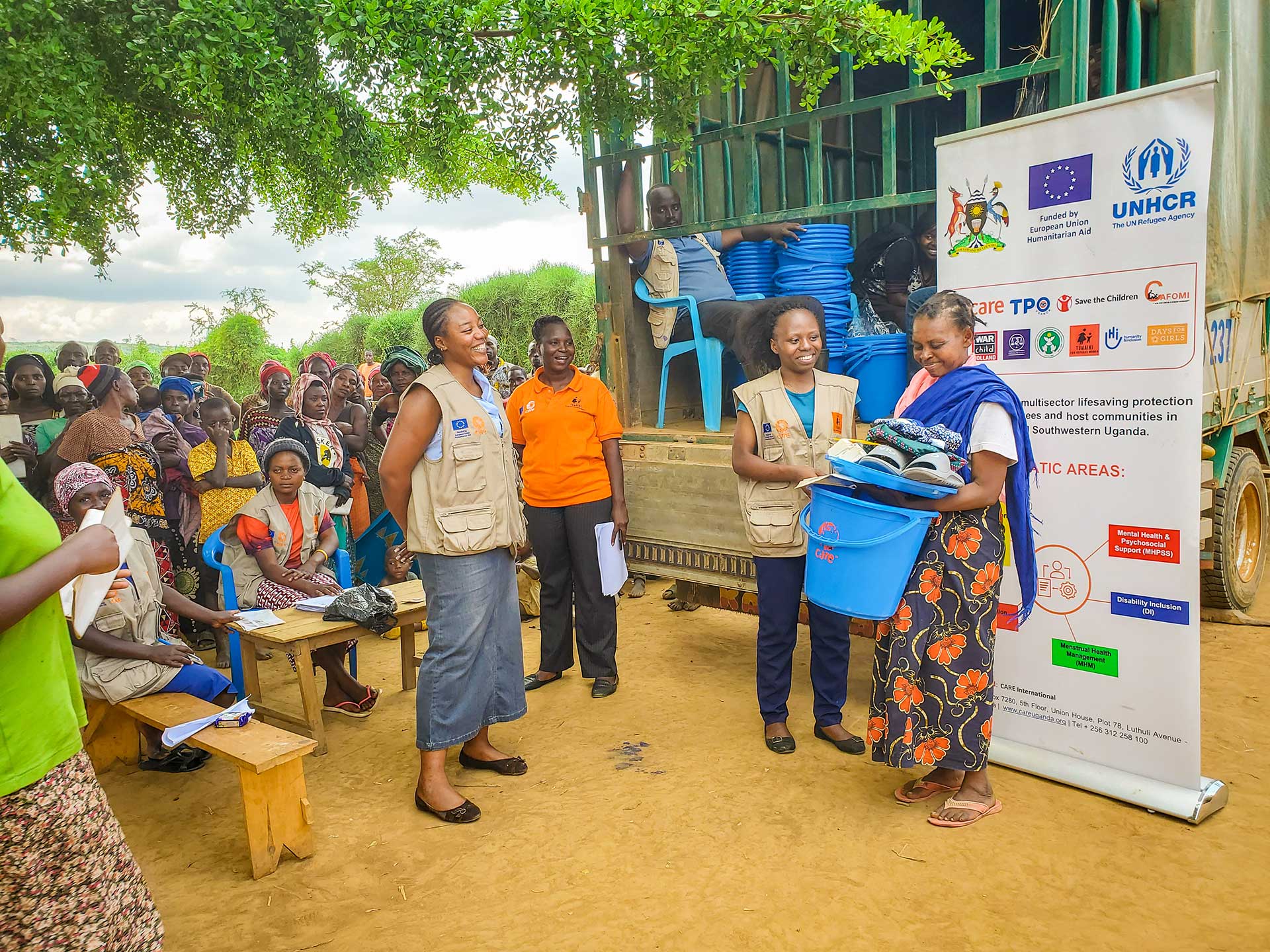
NAKIVALE — For decades, Uganda was the story the world told when it needed to believe that generosity toward refugees was possible.
While Europe built walls and Australia turned boats away, Uganda opened its borders. While politicians in wealthy nations campaigned on refugee caps and deportation flights, Uganda gave displaced families land, freedom of movement, the right to work, and a seat in their communities. The Uganda Refugee Model — built on the 2006 Refugees Act and enshrined in successive national policies — became the global benchmark for what a host country could be.
Today, it is collapsing.
**2 Million People. 6% of the Funding Required.**
The numbers tell the first part of the story.
By August 2026, Uganda was hosting more than 2 million refugees and asylum seekers — the largest refugee population in Africa, and one of the largest anywhere in the world. That figure represents a 10 percent increase from 1.8 million at the end of 2024. The majority — 57 percent — are from South Sudan, where intercommunal violence and economic collapse continue to displace hundreds of thousands. A further 31 percent are from the Democratic Republic of Congo, where the ongoing conflict in the east has accelerated dramatically in 2026. Smaller but significant populations have arrived from Somalia, Burundi, Eritrea, Rwanda, Sudan and Ethiopia.
When Uganda's Refugees Act came into force in 2009, the country was hosting 140,000 refugees. Seventeen years later, it hosts fourteen times that number.
The funding has not kept pace — not even close. In January 2026, the International Rescue Committee warned that just 6 percent of the funding required to sustain Uganda's refugee response for the year had been secured. The IRC had already been forced to close health services across eleven refugee settlements. More than one million refugees previously served by IRC health programmes were left without access to care. WFP food rations — the nutritional floor beneath which millions of refugees in Uganda cannot fall without catastrophic consequences — have been cut repeatedly since 2022, with the most severe reductions coming in 2025 and 2026 as international donor funding evaporated.
The primary driver of that evaporation is the suspension of US foreign assistance and the freeze of USAID programming globally — a decision by the Trump administration that has severed the largest single source of funding for Uganda's refugee response at the worst possible moment. Uganda's refugee response had been financed overwhelmingly by international donors, primarily the United States. When Washington pulled back, the entire architecture shuddered.
**The Model That Made Uganda Famous — and How It Worked**
Understanding what is being lost requires understanding what was built.
The Uganda Refugee Model rested on a deceptively simple premise: that a refugee, given land, movement and opportunity, could become self-reliant rather than permanently dependent. Each refugee household was entitled to a plot of agricultural land on which to grow food and build a home. Freedom of movement allowed refugees to work, trade and integrate into local economies. Children attended school alongside Ugandan nationals. The model demanded much of Uganda's host communities — but it offered something in return: development investment in refugee-hosting districts that would benefit both refugees and Ugandans living alongside them.
The model worked well enough, for long enough, that UNHCR and international donors held it up as a template the world should replicate.
**The Two Cracks That Became a Collapse**
Refugees International, which conducted field research at Nakivale Refugee Settlement in Isingiro District in February 2026 — one of Uganda's oldest and most expansive settlement sites, housing Congolese, Rwandans, Somalis and Eritreans — identified two structural failures at the root of the model's decline: donor retreat and land scarcity.
The land problem is mathematical. The 2006 Refugees Act was designed for a country hosting 140,000 refugees. Today's 2 million cannot be given the land plots the Act promised. There is not enough land. Nakivale and other settlements are overcrowded, their soils exhausted by continuous cultivation, their natural resources — firewood, water — stripped by the sheer weight of population. The self-reliance model requires land. The land has run out.
The donor problem is political. Uganda's refugee response never had a sustainable domestic funding base — it was built on the assumption that international donors, led by the United States, would continue to provide the billions of dollars needed to sustain it. That assumption proved fragile. USAID funding was suspended. UNHCR's own budget was cut. The IRC closed eleven health centres. WFP slashed rations. And in the gap left by retreating donors, refugees in Uganda's settlements are going hungry, going without medical care and going without the education their children were promised.
**Policy Rollbacks: When Generosity Becomes Unsustainable**
Under pressure from funding shortfalls and an overwhelmed system, Uganda's government has begun rolling back elements of the policy that made its model famous.
In November 2025, the Minister of Relief, Disaster Preparedness and Refugees Hilary Onek announced that Uganda would no longer grant refugee status to citizens from Ethiopia, Somalia and Eritrea — countries whose nationals had previously been welcomed into Uganda's open asylum system. In early 2026, Uganda temporarily lifted the prima facie status system that had allowed group-based refugee recognition for nationals of mass-displacement countries including South Sudan, the DRC, Burundi and Somalia — replacing it with individual refugee status determination at a time when the system's capacity to conduct individual assessments had been hollowed out by the same funding cuts driving the broader crisis.
The consequences are visible in the backlog. With UNHCR funding reduced — the agency that assists Uganda in conducting refugee status determinations — and individual assessment now required where group recognition once expedited processing, tens of thousands of asylum seekers are waiting in legal limbo.
The situation has attracted international attention of an unwelcome kind. Under a bilateral Asylum Cooperative Agreement signed with the United States in July 2025, Uganda began receiving non-Ugandan asylum seekers whose claims the US had dismissed and was seeking to remove to third countries. Between December 2025 and June 2026, 2,727 individuals had their cases designated for potential removal to Uganda under the agreement. Of the first eight sent, two received refugee status in Uganda, one fled the country, four returned to their home countries and one was awaiting repatriation — a result that illustrated the profound uncertainty into which Uganda was receiving people from a system that had already failed them.
**The People Inside the System**
Behind every statistic is a settlement. Behind every settlement is a community — of Congolese farmers who fled militias, South Sudanese families who lost everything in floods and gunfire, Somali traders who rebuilt their businesses from nothing in a foreign country, Eritrean students who crossed deserts and seas to reach a place that would let them study.
In Nakivale, researchers from Refugees International documented what funding cuts look like at ground level: health clinics with no medicines, schools with no teachers, families whose WFP food allocation no longer covers the weeks between distributions. Child labour has deepened across Uganda's refugee settlements, according to a Lutheran World Federation report, as families send children to work rather than watch them go hungry. Teenage pregnancy rates among refugee girls have risen sharply as economic desperation and educational disruption converge.
UNHCR's 2026-2030 multi-year plan, published this year, "anticipates continued refugee inflows due to persistent conflicts in the DRC, Sudan, and South Sudan" — a clinical acknowledgement that the pressure on Uganda's system will not diminish. The plan speaks of "efficient use of available resources" as one of its core strategies. When a humanitarian plan's central strategy is efficiency rather than adequacy, it is a plan written by people who know the money is not there.
**What Uganda Deserves — and What It Is Getting**
Uganda did not create the wars that sent 2 million people across its borders. It did not cause the conflicts in South Sudan, the DRC, Somalia and Eritrea that continue to push displaced families toward its settlements. It built a refugee model the world praised and replicated — and then watched the world retreat from funding it.
The model is not broken because Uganda was wrong to build it. It is cracking because the international community that praised it most loudly has proved least willing to pay for it when the bills became uncomfortable.
There is a direct line between a decision made in Washington to suspend USAID funding and a child going without food in Nakivale. There is a direct line between donor fatigue in European capitals and a refugee woman in Bidibidi delivering a baby without a midwife. The Uganda Refugee Model was never Uganda's alone to sustain. It was a global compact — and the global side of that compact is failing.
The sanctuary is cracking. The weight it is bearing is not its own.
---