September 12: The Day Tooro Crowned Its King — and the Day It Buried Him
September 12: The Day Tooro Crowned Its King — and the Day It Buried Him
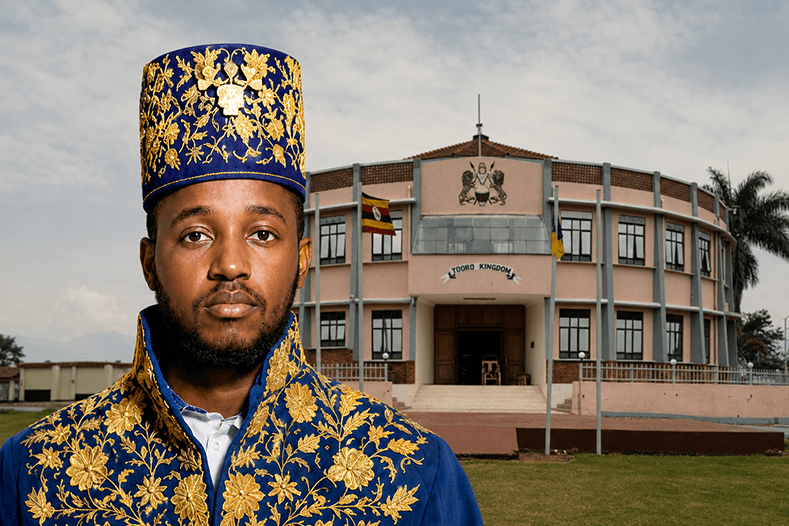
FORT PORTAL — Thirty-one years ago today, a three-year-old boy was lifted onto the throne of Tooro Kingdom. He was too young to understand what was happening. His father had died the previous day. The crown was placed on his head anyway, because kingdoms cannot wait for children to grow up.
Today, on the same date, the man that boy became was carried to his grave.
September 12, 1995: coronation.
September 12, 2026: burial.
The symmetry is not poetic licence. It is simply what happened. And in Fort Portal this morning, as mourners arrived at St John's Cathedral before the sun was fully up, that symmetry hung over everything — over the candlelight, over the hymns, over the Queen Mother who buried her son today, over the thousands who walked six kilometres in the September heat to say goodbye to the only king most of them had ever known.
---
**The Last Morning at Karuziika**
Public viewing of King Oyo's body ended at 5pm on Friday. The official vigil was held through the night. At 8:15 on Saturday morning, the body of Omukama Oyo Nyimba Kabamba Iguru Rukidi IV — referred to in Babiito tradition as Omuguta — left Karuziika Palace for the last time.
He had lain in state there for nine days. In those nine days, thousands of Tooro subjects had filed past his coffin — people who had grown up with him as their king, who had watched him grow from a toddler in royal regalia to a young man navigating the complexities of constitutional monarchy in modern Uganda. People who had never known another Omukama. People who came not because protocol required it but because grief did.
The procession left the palace at 8:15am and arrived at St John's Cathedral, Fort Portal City, where the body lay in state for less than 45 minutes before the service began at 9am. The Archbishop of the Church of Uganda, the Most Reverend Stephen Kaziimba Mugalu, presided. Four people gave speeches. The service ran until 1pm.
Then the procession moved — six kilometres along Fort Portal-Kasese Road toward Karambi — and the thousands who had gathered at the cathedral moved with it, on foot, because there were no more than 30 vehicles permitted in the official procession. The Queen Mother. The royal family. The princesses. The bishops. The President's representative. Everyone else walked.
"It is a final expression of love for the late king," co-chairperson of the burial committee Dr Richard Rwabuhinga had said when he announced the programme on Tuesday.
They walked.
---
**The Place He Will Rest**
Karambi Royal Tombs sits along Fort Portal-Kasese Road, six kilometres from the cathedral, on ground that has held Tooro's kings for generations. The public was barred from entering the tombs during the burial itself — Tooro Kingdom Deputy Prime Minister Henry Basaliza Araali explained that what happens at Karambi is governed by ancient rites that must be conducted in their proper order, by those mandated to conduct them.
The head of the royal ritualists — the Omusuuna — leads that order. As the procession approaches the gate of Gasani, the house of the kings, a prescribed exchange takes place between the Omusuuna and the Katikiro of Gasani. Nothing proceeds until it is complete.
When the casket is placed in the grave, the Omusuuna guides the incoming king in the casting of nine coffee berries — one for each of Tooro's nine clans — into the earth. It is among the most ancient of Babiito rites, performed at every royal burial for centuries. A thread of continuity that runs from the first kings of Tooro to the man being buried today.
King Oyo is the fourth Omukama to be buried at Karambi Royal Tombs. His father, Patrick Matthew Kaboyo Olimi III, is already there. The father who died when Oyo was three. The father whose death made a child a king. They rest in the same ground now.
Tooro Kingdom Prime Minister Calvin Armstrong Rwomiire was clear about what must not happen, regardless of any other consideration: "In our culture, we don't bury beyond 3pm. We must keep our culture."
---
**The Life That Was Lived**
Oyo Nyimba Kabamba Iguru Rukidi IV was born on April 16, 1992. His father died on August 26, 1995. He was crowned on September 12, 1995. He was three years old.
Guinness World Records recognised him as the world's youngest reigning monarch. He held that title not because he sought it but because history handed it to him before he could walk properly. He spent the next thirty-one years growing into it — navigating school and royal duties and the expectations of a kingdom and the demands of a modern Ugandan political landscape where traditional institutions exist alongside elected ones and where the Omukama's role requires the careful calibration of cultural authority and constitutional restraint.
He died on August 27, 2026, in Dallas, Texas, where he had travelled for medical treatment. He had been battling aggressive brain cancer. He was 34 years old. His mother, Queen Best Kemigisa, accompanied his casket on the flight home from Dallas Fort Worth International Airport on September 2. She sat beside him on that journey. She buried him today.
---
**The Man Who Cast the Coffee Berries**
Prince Edward Rukidi Kijanangoma stood at the graveside on Saturday and cast nine coffee berries into the earth. He is 56 years old. Until Wednesday evening, he was a news anchor at Uganda Broadcasting Corporation. Now he is the Omukama-elect of Tooro — chosen by 19 of 21 members of the Babiito royal succession committee at a candlelit ceremony at Karuziika Palace three days ago.
A colleague at UBC, Mary Tumwikirize, described him in a television interview this week in words that will follow him into his reign. "Someone you don't get to find in scandals," she said. "Someone that is so quiet."
The nine berries fell. The grave closed.
The man who was king for thirty-one years — crowned as a toddler, buried as a young man, on the same September day both times — was laid to rest beside the father he barely knew.
Tooro has a new king. Fort Portal has an absence it will take years to fill.
And somewhere in the Karambi tombs, in the quiet that follows every great funeral, September 12 is just a date on a headstone — carrying, in those few numerals, everything.
---
More in Business